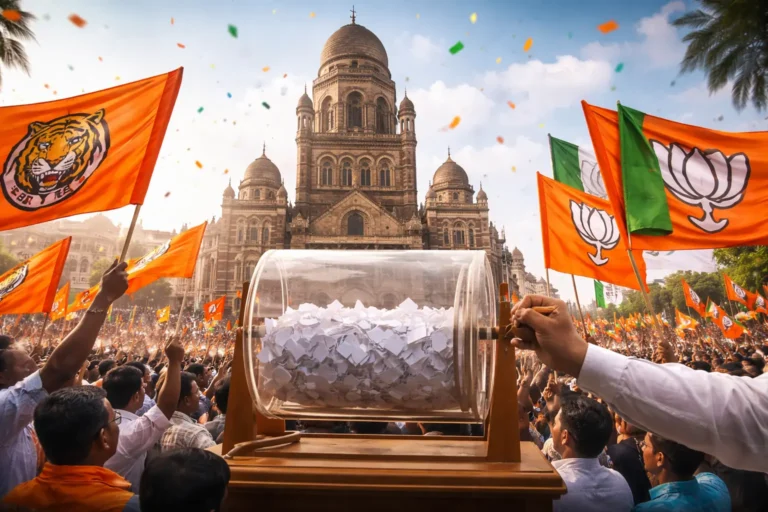

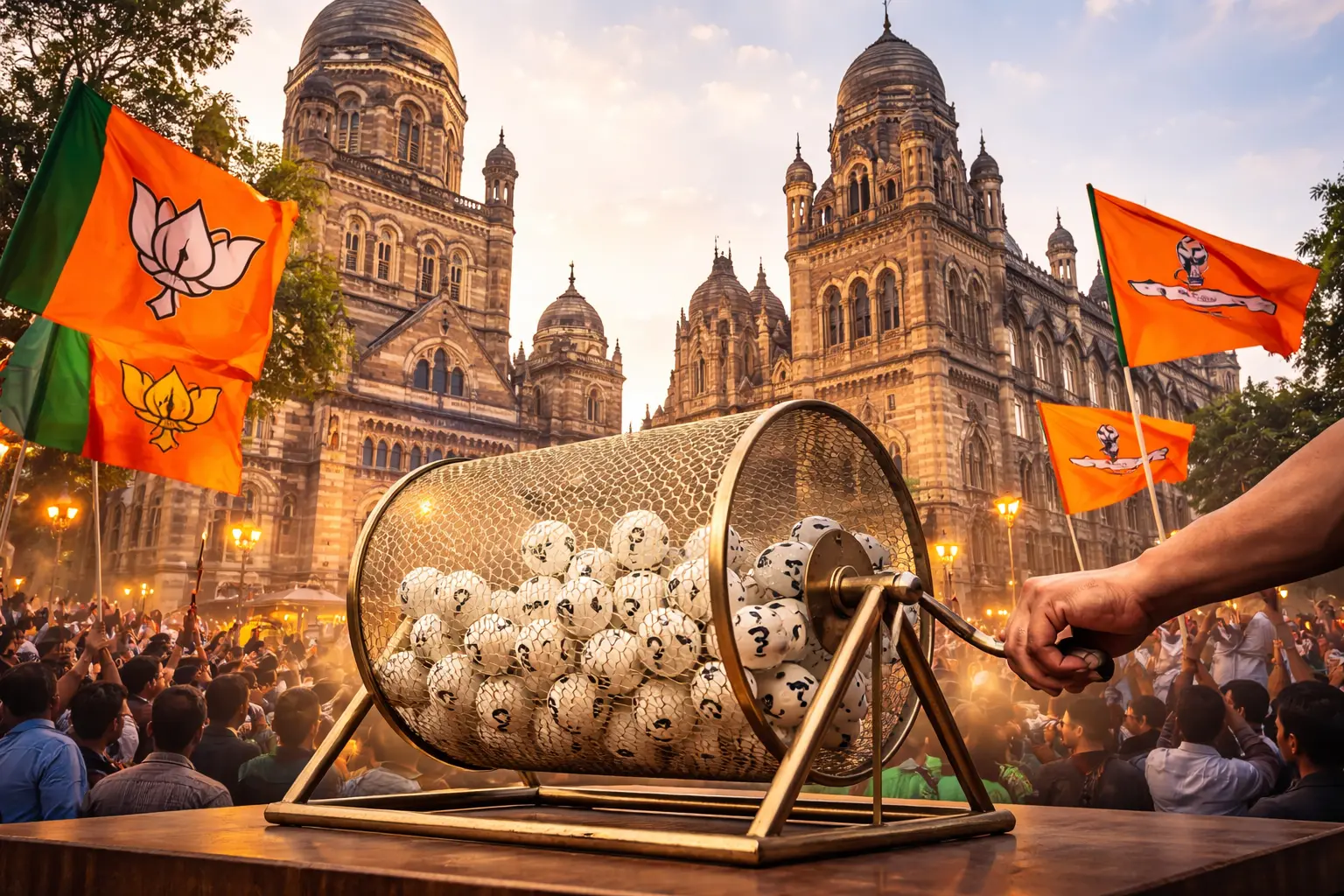
Mumbai is waiting for its next mayor, but the decision will not come from an election result. Instead, the future of the city’s top civic post depends on the Mumbai Mayor Reservation Lottery, a process that will decide which caste category the mayor will be chosen from.
This lottery-based system has shifted focus from political strength to social representation, making the mayoral race unpredictable and closely watched across the city.
Why the Mumbai Mayor Reservation Lottery Is So Important
Under India’s urban governance laws, mayoral posts must rotate among different reservation categories such as Scheduled Castes, Scheduled Tribes, Other Backward Classes, women, and the open category. The category is not announced in advance. It is selected through a formal draw conducted by the state’s urban development authorities.
Until the category is declared, political parties cannot officially announce their candidates. This is why Mumbai still does not have a mayor, even though the municipal house is already in place.
How Political Parties Are Calculating Their Chances
Once the reservation category is revealed, corporators belonging to that category become eligible for the mayor’s post. The mayor is elected through a simple majority vote in the 227-member municipal house.
At present, the main contenders are Bharatiya Janata Party, Shiv Sena, and Shiv Sena UBT.
The BJP holds the highest number of corporators overall, giving it an advantage if the draw results in the open, women, or OBC categories. However, Shiv Sena UBT performs better in Scheduled Caste and Scheduled Tribe categories, where representation is limited but decisive.
This means the lottery result could completely change which party gets the upper hand.
Reserved Categories Could Shift Power Balance
The contest becomes tighter in reserved categories. In Scheduled Caste and Scheduled Tribe segments, even a small number of corporators can influence the final outcome. This is why parties are closely tracking historical reservation patterns and preparing for different scenarios.
With the last two mayoral terms falling under the open category, there is a growing expectation that this time the post may be reserved.
What Happens After the Lottery Result
Once the reservation category is officially announced, a special meeting of corporators will be called to elect the mayor. Only members belonging to the selected category can contest, and the candidate who secures a simple majority will become Mumbai’s next civic chief.
Until then, political negotiations remain informal, and the city continues to wait.
Why Mumbai Residents Are Watching Closely
The mayor plays a key role in guiding civic priorities, public representation, and coordination within the municipal corporation. With infrastructure, transport, housing, and urban services under constant pressure, the leadership choice matters deeply for Mumbai’s future.
The Mumbai Mayor Reservation Lottery is not just a procedural step. It is a moment that could reshape the city’s political and administrative direction.