

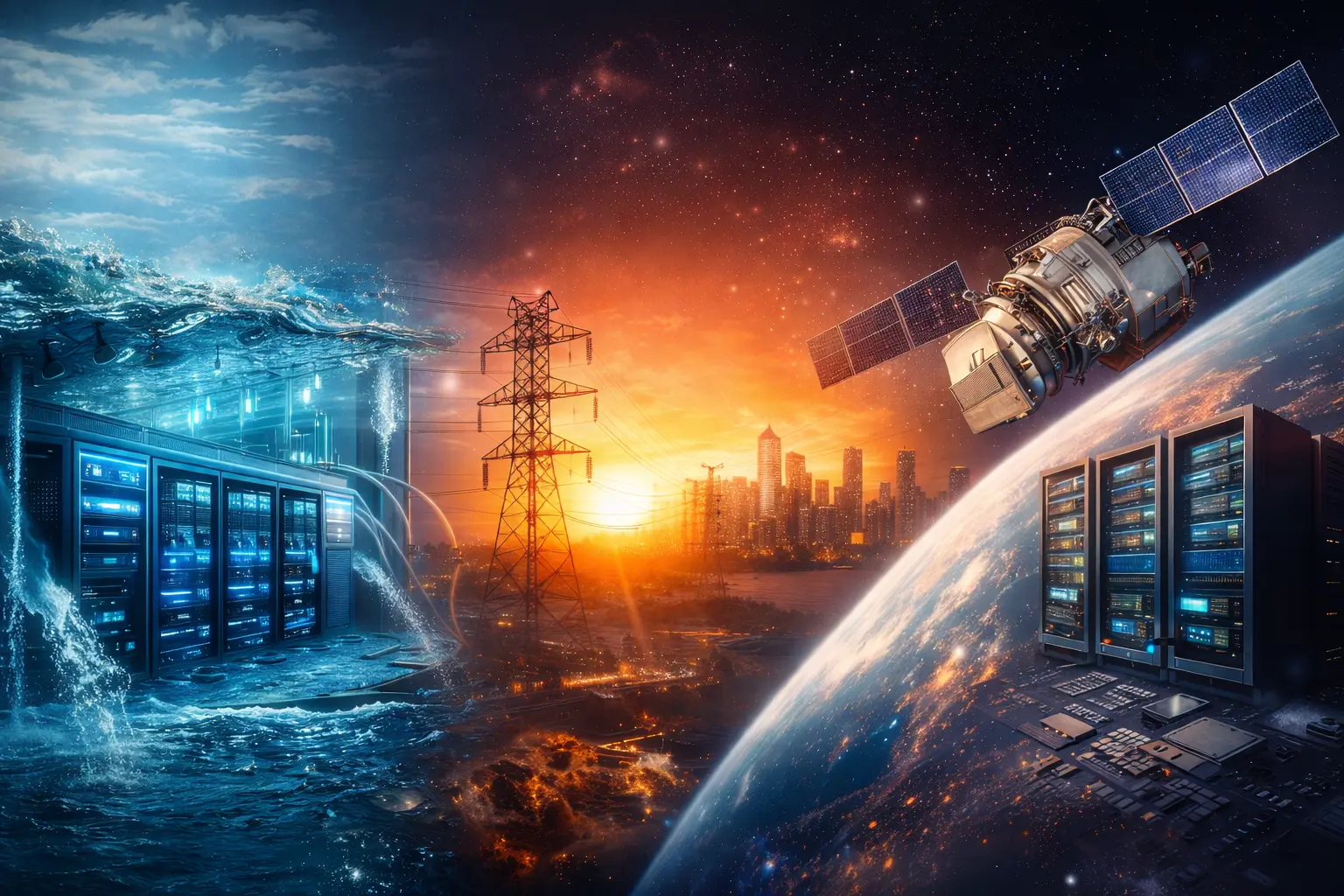
Cloud computing has become the backbone of the digital world over the past decade. Every application website AI service and enterprise solution depends on some form of cloud infrastructure. However as data volumes grow and real time processing demand increases energy consumption has reached record levels. This growing pressure has pushed the cloud industry to a critical turning point where sustainability has become as important as scalability.
Today cloud providers are exploring unconventional and innovative solutions such as data center spas underwater cooling systems and even space based servers. This article explains in detail how the global energy crunch is impacting cloud computing and how the future cloud infrastructure is being redefined. If you are interested in technology business or the digital future reading this article till the end will give you valuable insights.
Key Highlights
The energy crisis is fundamentally reshaping cloud computing and pushing the industry toward experimentation and innovation. Below are the key highlights explained in a column style format.
Energy demand of data centers is increasing rapidly
Cooling challenges are making traditional systems inefficient
Innovation push toward data center spas and underwater facilities
Space servers explored for low latency and renewable energy access
Cost impact influencing cloud service pricing models
Sustainability focus on green energy and power optimized infrastructure
These highlights clearly show that cloud computing is no longer just a software industry but an energy driven ecosystem.
Why the Energy Crunch Is Impacting Cloud Computing
Every layer of cloud computing has become increasingly energy intensive. AI workloads big data processing video streaming and real time analytics demand massive computing power. Traditional data centers that once consumed manageable levels of energy now use electricity comparable to that of small cities. This has increased pressure on power grids and prompted governments to introduce stricter regulations for cloud companies.
At the same time rising energy costs have significantly increased operational expenses for cloud providers. This pressure is not limited to infrastructure but also affects customer pricing plans service availability and expansion strategies. As a result the industry is being forced to adopt new energy efficient models that are sustainable in the long term.
Data Center Spas and Advanced Cooling Solutions
One of the biggest challenges caused by the energy crunch is data center cooling. As servers become more powerful they generate significantly more heat. Traditional air cooling systems are proving to be inefficient and expensive at scale. This has led to the rise of data center spas and advanced liquid cooling technologies.
In these modern setups servers operate in water based or liquid cooled environments where heat can be absorbed and reused efficiently. Some experiments even recycle waste heat for nearby residential or commercial heating systems. This approach reduces energy waste improves operational efficiency and is emerging as a strong foundation for future cloud infrastructure.
Space Servers and the Next Phase of Cloud Infrastructure
The energy crisis has pushed cloud companies toward an extreme yet innovative concept space based servers. Space offers a naturally cold environment which can significantly reduce cooling costs. Direct access to solar energy also makes space servers an attractive option for renewable power usage.
Although this concept is still in the experimental stage it has the potential to become a game changing solution in the future. Space servers could reduce the load on Earth based data centers and open new architectural possibilities for latency sensitive applications. This approach is increasingly viewed as a bold next step in the evolution of cloud computing.
How Energy Efficient Cloud Infrastructure Is Being Built
Cloud companies are viewing the energy crunch not only as a challenge but also as an opportunity. Efficiency improvements are being made at every level from infrastructure design to software optimization. AI driven workload management systems are reducing unnecessary power consumption and improving resource utilization.
The approach to building energy efficient cloud infrastructure focuses on smarter scheduling renewable energy integration and hardware level innovation. Green data centers and carbon neutral goals are no longer marketing terms but operational necessities. This transformation is making the cloud industry more responsible resilient and future ready.
Impact on Businesses and Consumers
The shift toward energy driven cloud infrastructure will have a direct impact on businesses and end users. In the short term cloud service pricing may fluctuate as energy costs become a major operational factor. However in the long term energy efficient systems are expected to make cloud services more reliable scalable and sustainable.
For consumers this means better performance fewer service disruptions and greener digital experiences. Businesses will need to adopt energy aware cloud strategies where workload optimization cost planning and sustainability considerations are equally important.
Conclusion
The energy crunch is a wake up call for the cloud computing industry pushing it toward the next level of innovation. From data center spas to space servers every experiment highlights a future where cloud infrastructure is not only fast but also intelligent and sustainable. This transformation is expected to deliver long term benefits for technology the environment and the global economy.
FAQs
Why is the energy crunch a major issue for cloud computing
Because data centers consume massive amounts of electricity and energy costs are rising rapidly worldwide
What does data center spas mean
It refers to advanced liquid based cooling environments designed to efficiently manage server heat
Are space servers real or just a concept
They are currently experimental but considered a promising future solution
Will cloud services become more expensive
There may be short term cost pressure but long term efficiency should bring stability
What will be the main focus of future cloud computing
Energy efficiency sustainability and renewable power integration