
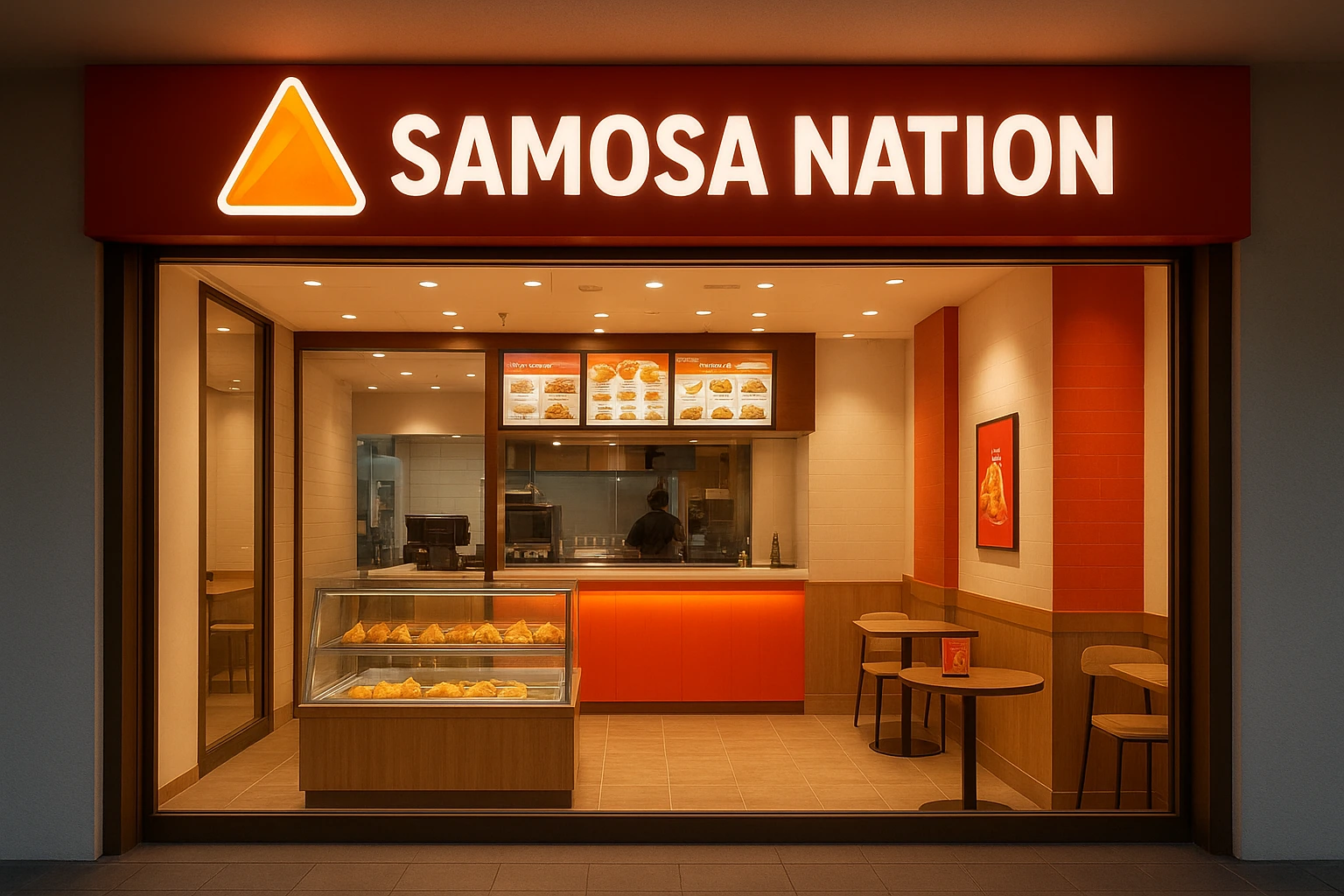
The Indian QSR (Quick Service Restaurant) segment is booming, especially in the vegetarian fast-food category. One brand that has caught massive popularity in recent years is Samosa Nation — a franchise known for premium samosas, fusion snacks, hygienic serving, and youth-focused branding.
With India’s snacking industry crossing ₹42,000 crore and customers preferring hygienic, affordable, and high-repeat foods, entrepreneurs are increasingly asking:
“Is the Samosa Nation franchise profitable enough to invest in 2025?”
This premium guide breaks down everything — revenue potential, profit margins, operating costs, menu-wise margin structure, breakeven timeline, ROI, city-wise earnings, and hidden challenges.
By the end of this guide, you’ll have a crystal-clear understanding of how profitable the Samosa Nation franchise really is in 2025.
Why Samosa Nation Franchise Profitability Matters in 2025
Samosas are not seasonal — they are an all-weather, all-category snack loved across India. This means:
- High repeat customer rate
- Consistent daily demand
- Low wastage
- Quick inventory turnover
- Affordable pricing → high volume business
In 2025, India’s dine-in + takeaway + delivery market for budget snacks is growing at 18–22% YoY, and brand-based samosa outlets are becoming a trend in Tier-1 to Tier-3 cities.
Samosa Nation operates on a simple, scalable, quick-service model, making it attractive for new entrepreneurs.
How Profitable Is Samosa Nation Franchise in 2025? (Complete Analysis)
To evaluate profitability, let’s break it down into:
- Revenue potential
- Menu-wise margin
- Operating expenses
- City-wise profit expectations
- ROI & breakeven period
Samosa Nation Franchise Revenue Potential (2025)
Daily footfall depends on:
- Store location
- Delivery demand
- Nearby offices, colleges, hostels
- Competition
- Menu pricing
- Local marketing
Average Monthly Revenue (Realistic Range)
| City Category | Monthly Revenue |
|---|---|
| Tier-1 Cities | ₹4.5 – ₹7.5 lakh |
| Tier-2 Cities | ₹3 – ₹5.5 lakh |
| Tier-3 Cities | ₹2 – ₹4 lakh |
| Mall / Food Court | ₹5 – ₹8.5 lakh |
College areas, tech parks, and market streets usually outperform all other locations.
Profit Margins in Samosa Nation Franchise (2025)
QSR brands earn high margins because ingredients are inexpensive while selling prices are premium.
Net Profit Margin Range: 22% – 35%
Menu-Wise Margin Breakdown
| Menu Category | Margin Range |
|---|---|
| Samosas (Classic) | 45–60% |
| Fusion Samosas | 40–55% |
| Burgers / Wraps | 35–50% |
| Snacks / Fries | 35–45% |
| Tea / Beverages | 65–80% |
| Combos | 40–55% |
Beverages and basic samosas boost blended margins significantly.
City-Wise Monthly Profit Estimate
Tier-1 Cities (Mumbai, Delhi, Bengaluru, Hyderabad)
- Revenue: ₹4.5–7.5 lakh
- Net Profit: ₹1.1 – ₹2.6 lakh
Tier-2 Cities (Surat, Jaipur, Indore, Lucknow, Nagpur)
- Revenue: ₹3–5.5 lakh
- Net Profit: ₹80,000 – ₹1.8 lakh
Tier-3 Cities (Hubli, Nashik outskirts, Guntur, Bhilai)
- Revenue: ₹2–4 lakh
- Net Profit: ₹55,000 – ₹1.2 lakh
Tier-2 consistently performs best due to lower rent and high food demand.
Operating Costs Breakdown (2025 Estimate)
| Expense Type | Monthly Cost |
|---|---|
| Rent | ₹20,000 – ₹60,000 |
| Staff Salaries | ₹25,000 – ₹55,000 |
| Raw Material Purchase | ₹1.2 – ₹2 lakh |
| Electricity & Utilities | ₹8,000 – ₹15,000 |
| Delivery App Commission | ₹15,000 – ₹40,000 |
| Local Marketing | ₹5,000 – ₹15,000 |
A well-managed outlet keeps wastage below 5% to maintain healthy profits.
Total Investment & Breakeven (2025)
Based on the franchise information:
Total Investment: ₹8 – ₹12 lakh
(Setup + interiors + machinery + franchise fee + initial stock)
Typical Breakeven Period: 9 – 16 months
ROI Example (2025)
Assume:
- Investment = ₹10 lakh
- Monthly Profit = ₹1.2 lakh
- Annual Profit = ₹14.4 lakh
ROI = (14.4 ÷ 10) × 100 = 144% per year
This is extremely strong for a QSR franchise.
ROI Calculator
Your ROI will be displayed here.
Which Cities Are Most Profitable in 2025?
Top-Performing Locations
- Tier-2 markets (Surat, Indore, Coimbatore, Patna)
- College hubs
- Office clusters
- Busy residential markets
- Railway station areas
Least Profitable
- High-rent malls with low footfall
- Overcrowded food courts
- Areas with strong local competition
Factors That Influence Profitability
- Location – 90% of success depends on footfall.
- Menu Mix – Fusion samosas + beverages = higher margins.
- Delivery Optimization – Swiggy & Zomato orders boost revenue.
- Staff Training – Faster service increases customer retention.
- Local Marketing – Social media + college outreach works great.
Hidden Challenges New Owners Face
- Over-dependence on delivery apps
- Wastage due to poor planning
- Wrong location selection
- Inconsistent taste due to staff rotation
- Low customer recall without branding
Expert Tips to Increase Profit
- Introduce evening combo offers (high volume hours).
- Run WhatsApp menu promotions in nearby offices.
- Offer monthly meal passes for college students.
- Focus on high-margin beverages.
- Use Instagram reels + micro-influencers to go viral locally.
Final Verdict: Is Samosa Nation Franchise Profitable in 2025?
YES — Samosa Nation is a highly profitable, low-cost QSR franchise in 2025.
With strong margins, low wastage, and fast customer turnover, it offers:
- Monthly profit: ₹55,000 to ₹2.6 lakh
- ROI: 100%+ in many cities
- Breakeven: 9–16 months
- Investment: ₹8–12 lakh
If you choose a high-footfall location and maintain consistent quality, Samosa Nation can be a high-income, fast-growing business opportunity.
1. What is the minimum investment required?
₹8–12 lakh depending on the city and store size.
2. How much can I earn monthly?
₹55,000 – ₹2.6 lakh depending on location.
3. Is it profitable in Tier-2 and Tier-3 cities?
Yes — lower rent boosts margins significantly.
4. What is the ideal store size?
100–250 sq.ft is enough for takeaway + delivery.
5. How soon can I break even?
Within 9–16 months in most cities.
6. Do they provide training?
Yes — guidance for operations, recipes, and setup.